Cornell University
 Facebook
 Instagram
 Youtube
 Tiktok
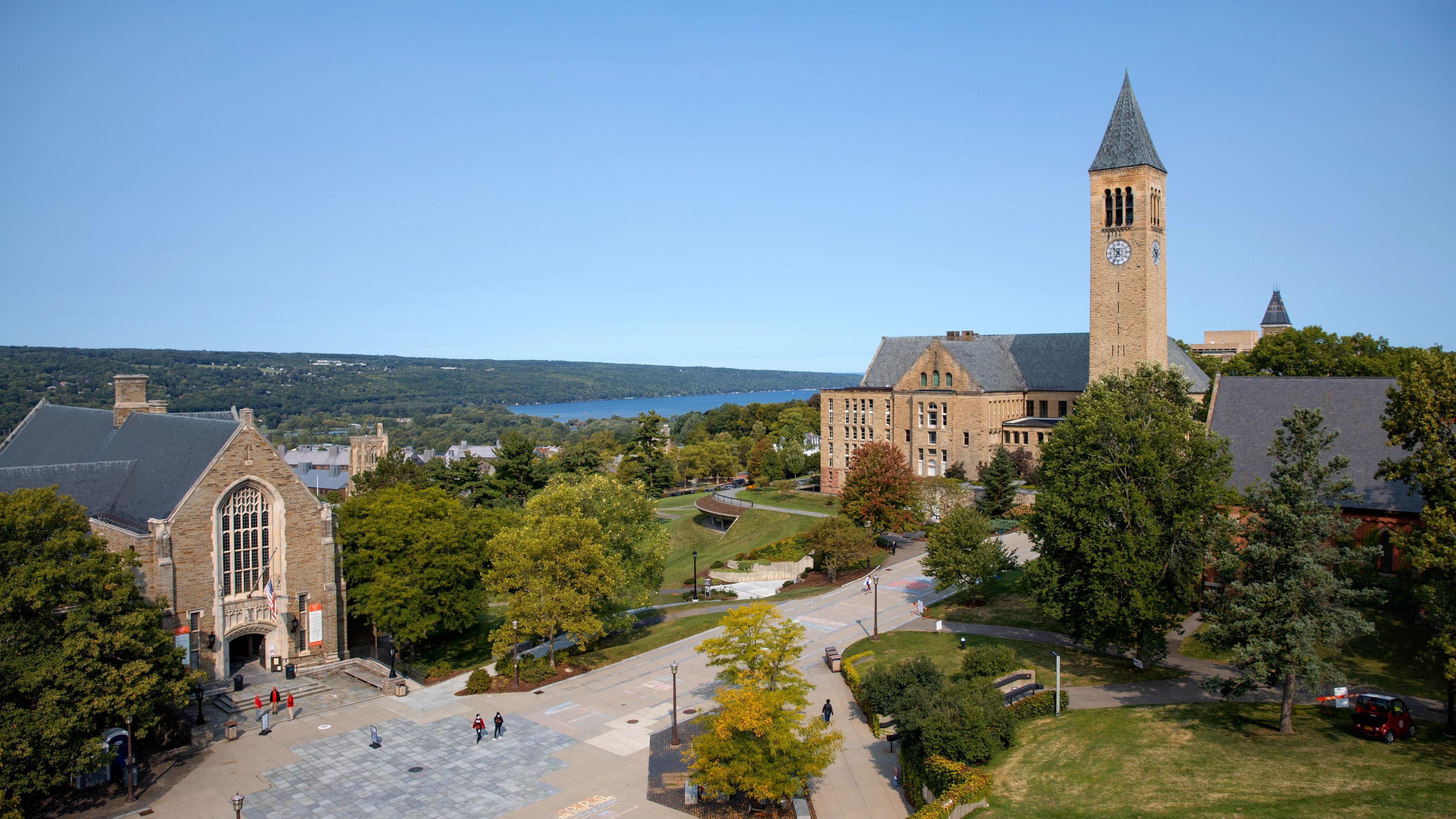
Founded in 1865, Cornell University is built on a foundation of diverse academic offerings and a dedication to public service. Nestled in the picturesque setting of Ithaca, New York, Cornell provides an idyllic backdrop for scholarly pursuits, featuring a campus enriched by natural beauty, including lakes, gardens, and rolling hills. The university is famed for its rigorous academic programs, encompassing a wide range of majors and degrees. It offers 2,500 courses across 100 different areas of study, thus appealing to a broad spectrum of student interests. Cornell boasts a vibrant atmosphere, enabling interdisciplinary collaboration among students and faculty across various fields. The institution is not only known for its outstanding academic standards but also its commitment to public engagement and improving life quality on both local and global scales. Through its mission, Cornell reinforces the value of knowledge and education for social good. With 64 Nobel Laureates among its alumni, the university stands as a beacon for aspiring students seeking to make impactful contributions to their fields. Students benefit from extensive financial aid options, ensuring education is accessible regardless of economic background. Together with an engaging campus life, top-notch faculty, and a vast array of resources, Cornell enhances every student’s potential, preparing them for success in a competitive world.




- Official academic records
- Financial statement and certificate
- Statement of purpose
- Letter of recommendation
- Copy of passport
- Curriculum vitae
- Valid Passport
- Academic Transcripts (translated into English if necessary)
- Standardized Test Scores (e.g., SAT/ACT for undergraduate; GRE/GMAT for graduate programs—note that many universities have adopted test-optional policies since 2021)
- English Proficiency Test Scores:
- TOEFL iBT (recommended: 80–100+)
- IELTS (recommended: 6.5–7.5+)
- Duolingo English Test (DET) (recommended: 110–130+)
- Letters of Recommendation (typically 2–3)
- Statement of Purpose / Personal Essay
- Resume/CV (especially for graduate programs or work experience-based applications)
- Application Form and Fee: Most applications cost $50–$100
- Portfolio (for design, art, music, or architecture-related programs)
- Undergraduate: Tuition & Fees ($20,000 – $50,000), Living Expenses ($10,000 – $18,000), Health Insurance ($1,200 – $2,400), Books & Supplies ($800 – $1,500). Total: $35,000 – $70,000+
- Graduate: Tuition & Fees ($25,000 – $60,000), Living Expenses ($10,000 – $20,000), Health Insurance ($1,200 – $2,400), Books & Supplies ($800 – $1,500). Total: $37,000 – $80,000+
- Work up to 20 hours/week during the academic semester
- Work full-time during scheduled breaks (summer, winter)
- Employment is usually limited to on-campus jobs in the first academic year
- Curricular Practical Training (CPT) – Paid internships or training related to your field of study
- Optional Practical Training (OPT) – Temporary work authorization after graduation or during your final year
Similar universities