Nanjing University of Posts and Telecommunications
 Facebook
 Instagram
 Youtube
 Tiktok

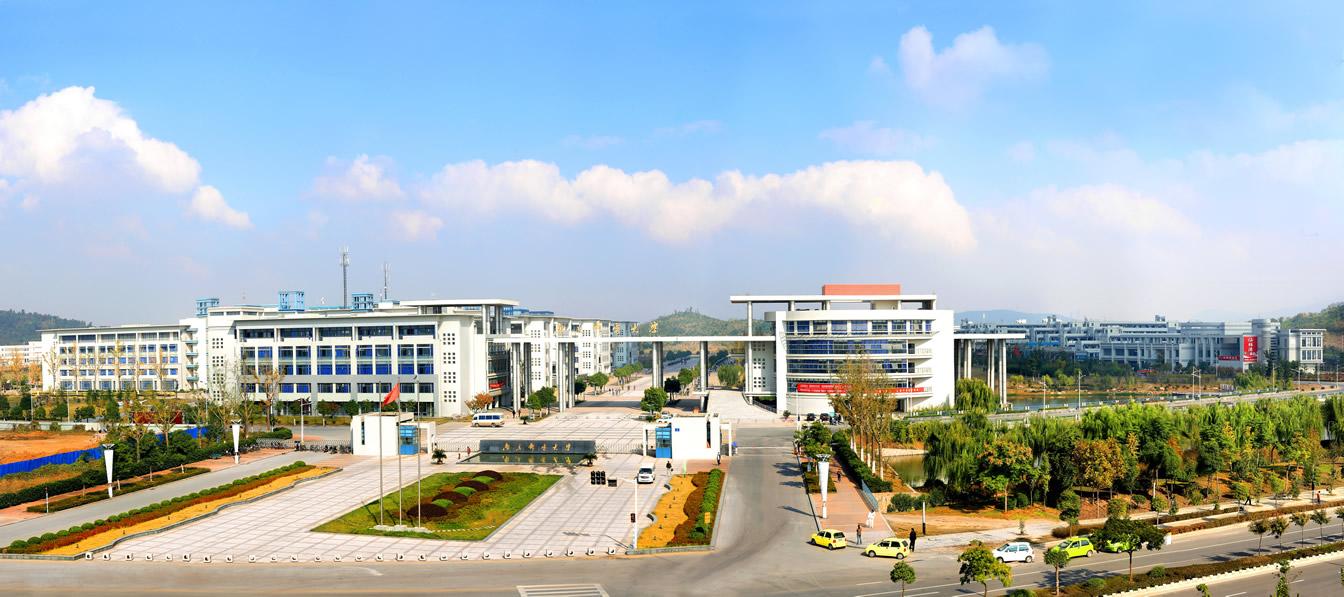
Nanjing University of Posts and Telecommunications is a national "double first-class" university and a high-level university in Jiangsu Province. Its predecessor was the Eighth Route Army combat mail cadre training class, which was born in the Shandong Anti Japanese Base in 1942. It is one of the schools that systematically trained communication talents at the early stage of our Party and our army. In 1958, it was approved by the State Council to be transformed into a undergraduate university, named Nanjing University of Posts and Telecommunications; In April 2005, it was renamed Nanjing University of Posts and Telecommunications. The university was originally a key university directly under the Ministry of Posts and Telecommunications and the Ministry of Information Industry. Since 2000, it has been jointly built by the central and local governments (now the Ministry of Industry and Information Technology, the National Post Office and Jiangsu Province). In 2018, it will become a "double first-class" construction university jointly built by the Ministry of Education and Jiangsu Province, with Jiangsu Province as the main management. At present, the university has developed into a university with engineering as the main body, electronic information as the characteristics, science, engineering, economics, management, literature, education, art, law and other disciplines integrated, and multi-level education such as post doctoral, doctoral, master's, and undergraduate coordinated development. Over the past 70 years, the school has delivered more than 240000 outstanding talents of all kinds to the country. Many of them have become leaders, technical elites and management backbones in the information industry and population and family planning fields at home and abroad, and are reputed as "the cradle of Chinese IT talents".



- Official academic records
- Financial statement and certificate
- Statement of purpose
- Letter of recommendation
- Copy of passport
- Curriculum vitae
- Valid Passport
- Academic Transcripts: High school for bachelor's, bachelor's degree for master's, etc.
- English/Chinese Language Proficiency:
- For English-taught programs: IELTS 6.0+, TOEFL 80+ (some accept Duolingo)
- For Chinese-taught programs: HSK 4 for bachelor's, HSK 5 or 6 for master's
- Recommendation Letters (2 required for master's and PhD)
- Personal Statement / Study Plan
- Resume/CV
- Medical Examination Form (Foreigner Physical Examination)
- Non-criminal Record
- Completed online application (via university portal or CSC/Study in China platforms)
- Application Fee (varies: typically 400–800 RMB)
- Diploma/Language: $1,500 – $3,000
- Bachelor's: $2,000 – $5,000
- Master's: $3,000 – $7,000
- MBA / Medicine: $5,000 – $10,000
- During term, work-study is in principle limited to 8 hours per week and 40 hours per month.
- During winter and summer vacations, the limits are in principle 16 hours per week and 80 hours per month; there is no general allowance for full-time holiday work.
- Off-campus work-study conditions include being at least 18, holding a valid student residence permit with at least six months remaining, having studied continuously at the current institution for at least one year, and meeting academic, attendance, conduct and university requirements.
- Before off-campus work or internships, obtain university approval and the required residence-permit remarks specifying the location and duration.
Similar universities