Shanghai Jiao Tong University
 Facebook
 Instagram
 Youtube
 Tiktok
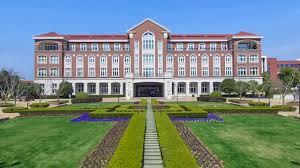
Shanghai Jiao Tong University (SJTU) was founded in Shanghai, China, in 1896, with the goal of cultivating talented professionals for the nation. Today, SJTU has become one of the world's top 100 universities and a key university directly under the administration of the Ministry of Education (MOE) of the People's Republic of China and co-constructed by MOE and Shanghai Municipal Government. SJTU is currently comprised of 6 campuses with more than 300 hectares. SJTU has 34 schools/departments, 12 affiliated hospitals, 13 affiliated research institutes, 23 directly affiliated units and 5 directly affiliated enterprises, with 18,004 full-time undergraduates, 28,439 full-time master degree candidates, and 1,858 overseas students. SJTU faculty includes 3,887 full-time teachers, 30 members of the Chinese Academy of Sciences, and 27 members of the Chinese Academy of Engineering. As a comprehensive university, SJTU offers 75 undergraduate programs covering 9 major disciplines: economics, law, literature, science, engineering, agriculture, medicine, management, and arts. Over the 128 years of its history, SJTU has educated more than 400,000 talents for the country and the world, including Jiang Zemin, a former president of China, and Tsien Hsue-shen, China's "Father of Space Science." Other famous SJTU scholars include Wu Wenjun, a great master of mathematics and winner of the first National Supreme Award for Science and Technology, as well as Wang Zhenyi, winner of the Kettering Prize for cancer research. Over 200 members of the Chinese Academy of Sciences and the Chinese Academy of Engineering are SJTU alumni. SJTU enjoys an increasingly high scientific research level and technological innovation level. Over the past 2 decades, SJTU has won 99 national science awards, and has led the country for the 14th consecutive year in terms of the number of projects founded by the National Natural Science Foundation of China. In 2023, the number of CNS papers hits a historical high with a total number of 51. SJTU is encouraging talents all over the world. SJTU also prioritizes the quality of its campus facilities, such as libraries, student innovation centers, laboratories, and sports facilities. Committed to education through culture, SJTU has integrated traditional Chinese culture into the campus culture development and has won a series of awards, such as the ACM world Championship, the iGEM Competition, and the MCM/IMC Contest. SJTU took the lead in organizing a variety of activities nationwide and had excellent performances in sports events, drama, symphony orchestra, and other similar activities. SJTU insists on enhancing educational internationalization, constantly improving its comprehensive strengths and global influence, exploring a future-oriented internationalization strategy, speeding up the implementation of a new international development plan, expanding overseas layout, building overseas centers, deepening strategic cooperation, and promoting in-depth exchange visits so as to make steady progress towards the goal of establishing a world-class institution of higher education. Carrying forth the mission of preserving cultural heritage, seeking truth, bearing the responsibility of invigorating the Chinese nation and all humankind, today, this centennial university is sailing towards the goal of becoming a comprehensive, innovative, and internationalized world-class university. Shanghai Jiao Tong University belongs to China, but more so, it belongs to the world.




- Official academic records
- Financial statement and certificate
- Statement of purpose
- Letter of recommendation
- Copy of passport
- Curriculum vitae
- Valid Passport
- Academic Transcripts: High school for bachelor's, bachelor's degree for master's, etc.
- English/Chinese Language Proficiency:
- For English-taught programs: IELTS 6.0+, TOEFL 80+ (some accept Duolingo)
- For Chinese-taught programs: HSK 4 for bachelor's, HSK 5 or 6 for master's
- Recommendation Letters (2 required for master's and PhD)
- Personal Statement / Study Plan
- Resume/CV
- Medical Examination Form (Foreigner Physical Examination)
- Non-criminal Record
- Completed online application (via university portal or CSC/Study in China platforms)
- Application Fee (varies: typically 400–800 RMB)
- Diploma/Language: $1,500 – $3,000
- Bachelor's: $2,000 – $5,000
- Master's: $3,000 – $7,000
- MBA / Medicine: $5,000 – $10,000
- Students on X1 visa (for over 180 days) may apply for part-time work after university approval
- You must get your residence permit marked with "part-time work allowed"
- Allowed to work no more than 8 hours/week during study; full-time in holidays may be permitted
- Working without approval is illegal and may lead to visa cancellation
Similar universities