Home / Universities / Trine University

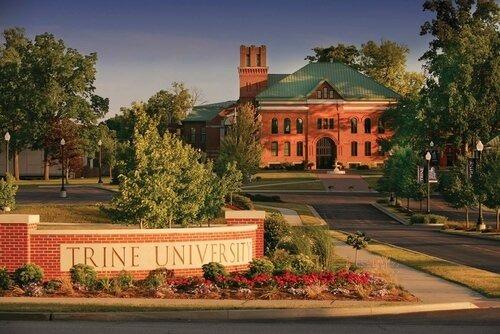
Trine University
Angola, Indiana
View programs
Intakes
( Jan/Feb , Jun/Jul , Aug/Sep ) 2027
INTAKE OPEN
Note: Intake dates are subject to change.Admission offer10-15 days after your application is submitted
University information
Address
Angola, Indiana
View on Google map
Email
Connect with WiseAdmit
Emailinfo@wiseadmit.io
 Facebook
 Instagram
 Youtube
 Tiktok
Need help deciding?Start a chat & get expert guidance.

Sanju DongolNepal
Start conversation
Highlights
US News ranking: 1000
Programs offered: 2
International students: 7700
Acceptance rate: N/A
About
Trine University is a private university with a strong emphasis on engineering, business, and health sciences. Known for small class sizes and personalized education, Trine has become popular among international graduate students for its affordable, practical programs. The university’s Allen School of Engineering, Rinker-Ross School of Health Sciences, and business programs offer hands-on experience with excellent placement outcomes—over 99% job placement within 6 months. Its low cost of living, modern campus infrastructure, and safe environment make it an appealing option for international students looking for ROI-driven education.
Why choose this university?
1. Access to research labs, libraries, gym, golf course, and career services
2. Strong global network and support services.
Check if you qualify for a scholarshipIt just takes 3 minutes and it’s FREE!
Check your WiseScore®


Cost of studying at Trine University
Overall cost approximately$13,000 /year
$12,000 /yearAverage tuition fee
$7,000 /yearOn-Campus acommodation
$6,000 /yearCost of Living
Available Scholarships
No scholarships found
Admissions at Trine University
Application fee$0
Payment via:

Documents required to apply
- Official academic records
- Financial statement and certificate
- Statement of purpose
- Letter of recommendation
- Copy of passport
- Curriculum vitae
FAQ
What are the admission requirements for international students in the USA?
U.S. universities have a holistic admissions process, but standard requirements typically include:
- Valid Passport
- Academic Transcripts (translated into English if necessary)
- Standardized Test Scores (e.g., SAT/ACT for undergraduate; GRE/GMAT for graduate programs—note that many universities have adopted test-optional policies since 2021)
- English Proficiency Test Scores:
- TOEFL iBT (recommended: 80–100+)
- IELTS (recommended: 6.5–7.5+)
- Duolingo English Test (DET) (recommended: 110–130+)
- Letters of Recommendation (typically 2–3)
- Statement of Purpose / Personal Essay
- Resume/CV (especially for graduate programs or work experience-based applications)
- Application Form and Fee: Most applications cost $50–$100
- Portfolio (for design, art, music, or architecture-related programs)
How much does it cost to study in the USA?
Here's a breakdown of estimated annual costs (in USD):
- Undergraduate: Tuition & Fees ($20,000 – $50,000), Living Expenses ($10,000 – $18,000), Health Insurance ($1,200 – $2,400), Books & Supplies ($800 – $1,500). Total: $35,000 – $70,000+
- Graduate: Tuition & Fees ($25,000 – $60,000), Living Expenses ($10,000 – $20,000), Health Insurance ($1,200 – $2,400), Books & Supplies ($800 – $1,500). Total: $37,000 – $80,000+
Can international students work part-time while studying in the USA?
Yes. Under F-1 visa regulations, international students can:
- Work up to 20 hours/week during the academic semester
- Work full-time during scheduled breaks (summer, winter)
- Employment is usually limited to on-campus jobs in the first academic year
- Curricular Practical Training (CPT) – Paid internships or training related to your field of study
- Optional Practical Training (OPT) – Temporary work authorization after graduation or during your final year
Load more
Similar universities


Fengjie,Chongqing
Taught In:
English
Application Fee:
CN¥500
Programs:
3
Acceptance
N/A
Living cost
CN¥16,000
Enrollment
N/A

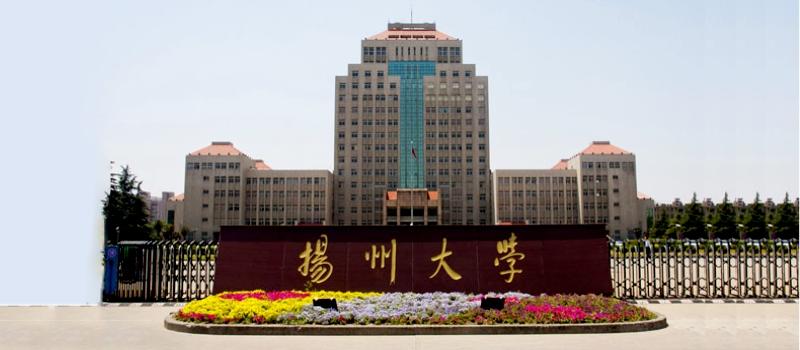
Yangzhou City, Jiangsu
Taught In:
English
Application Fee:
CN¥660
Programs:
6
Acceptance
N/A
Living cost
CN¥5,000
Enrollment
N/A

Yangzhou, Jiangsu
Taught In:
English
Application Fee:
$78
Programs:
2
Acceptance
N/A
Living cost
$1,200
Enrollment
N/A